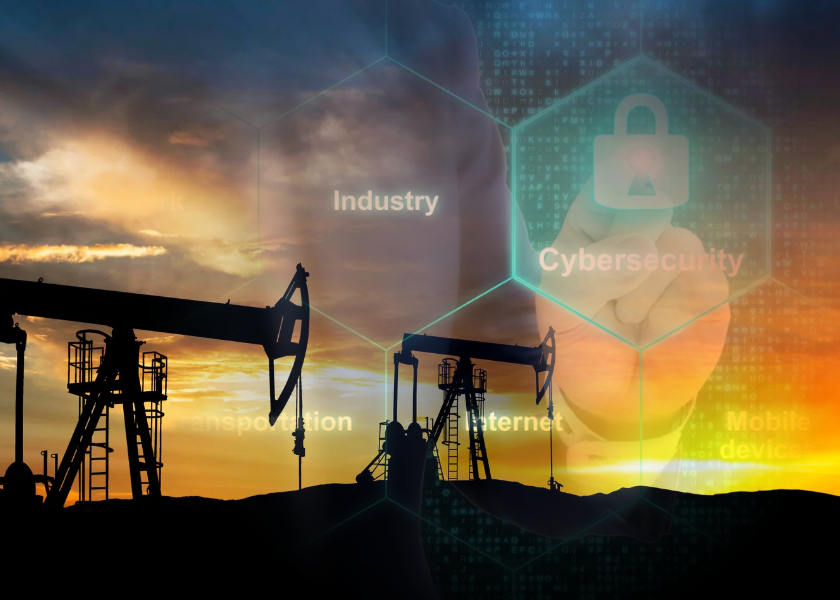
Oil & gas cybersecurity challenges in GCC countries are not just technical issues; they are national security concerns. The Gulf region depends heavily on oil and gas for economic stability, so any disruption can ripple across businesses, governments, and households. With cybercriminals getting smarter and geopolitical tensions adding fuel to the fire, energy operators in the GCC face unique threats.
Outdated industrial systems, rapid digitalization, and reliance on third-party vendors all create weak points. Add in the shortage of skilled cybersecurity professionals, and the stakes get even higher. To avoid Oil & Gas Cybersecurity Challenges, GCC operators must adopt a proactive approach, one that blends technology, governance, and strong human processes.
Why Oil & Gas Cybersecurity Challenges Matter
The oil and gas industries are one area that is most likely to be attacked due to the high value attached to them and the effects it has across the world. When a plant breaks down, the impact of such an event would not just be confined to one business; it would be to the economy, energy supply, and even public safety.
All these risks are increased in the GCC. The current pace of digital transformation is very rapid; however, some plants continue to operate using legacy operational technology (OT). Unlike contemporary IT systems, these older industrial systems were not considered to have security in mind. This has led to chains where even less significant violations can cause a huge failure. In addition, attackers are not only opportunistic. Attacks on critical infrastructure are of specific interest to nation-state actors and highly sophisticated criminal groups. Their objective is to steal information, create havoc, or blackmail governments. The mixture predisposes the GCC energy sector, particularly to vulnerability.
Key Oil & Gas Cybersecurity Challenges
Among the greatest obstacles is legacy equipment. Numerous OT and industrial control systems remain on older software that is difficult to patch. This is what the criminals in cyberspace understand. There is increasing convergence of IT and OT. Although the harmonization of these networks will reduce inefficiency, it exposes them to greater risks. Hackers who gain access to an IT system can, at times, switch into industrial systems that operate pipelines or refineries.
Third-party risks compound it. Contractors, vendors, and remote facilities tend to stretch out the network to include those outside the company walls. The absence of strict monitoring presents an opportunity to infiltrators who may enter the system through the poor systems of the vendors. Most operators lack a complete catalog of resources, and consequently can never discern intrusions until it is too late.
Governance and Regulatory Gaps
Regulations regarding the oil and gas sectors are still in a developing stage in the GCC, but there has been great improvement in the creation of national cybersecurity frameworks. As an illustration, Saudi Arabia has come up with stringent Essential Cybersecurity Controls, whereas other countries in the GCC are slowly revising their legislation.
The problem is regularity. The presence of different regulations in different countries of the GCC region makes it a challenge for businesses to remain compliant in case of operating in several countries. Also, there is no clear sector-specific guidance for oil and gas. This failure to harmonise may delay responses and leave open grounds to attack by the attackers. Thus, there is a need to have clearer and more harmonized regulations. Operators must have the right guidance on the exact standards to abide by, especially when dealing with cross-border operations.
People and Process Shortfalls
It takes more than technology. Human and process-related problems are also imperative. In the first place, the shortage of competent OT cybersecurity professionals exists in the area. Most teams have robust IT security but lack the specialised skills in industrial systems. Attacks last long without the proper mitigating knowledge.
Processes also have a significant role to play. Uptime is often a priority of maintenance and change management at the expense of security. This implies that important updates and patches are delayed in some cases. Moreover, roles in dealing with an incident tend to be ambiguous, particularly in a case where several vendors are present.
The solution? Constant training, formalized incident playbooks, and robust vendor management. Integrating cybersecurity with the business operations ensures the safety aspect is not an appendage.
Practical Steps for Operators
So, what can operators do right now?
- Assess the risks and detect the important assets.
- Isolate IT and OT networks to restrict the transfer of attackers.
- Install OT-specific monitoring solutions to detect anomalies as early as possible.
- Multi-factor authentication, strong privileges on vendors.
- Conduct OT-oriented incident response drills with staff, regulators, and vendors.
- Contract managed detection and response partners to do continuous monitoring.
Not only do these measures mitigate the risks, but they also increase the trust of regulators, partners, and people.
Strategic Leadership and Culture
Tracking cybersecurity in oil and gas is not only the duty of the IT team, but it should be a priority of the leadership. Boards and executives should consider cyber risk as part of operational risk.
Leaders must make their cyber strategies consistent with the regional threat intelligence and have usable playbooks amongst their employees. Clearly defined KPIs, a focus on accountability, and the head of the organisation, and finding a balance between uptime and security can make cybersecurity not only a cost centre but a competitive advantage.
Vendor and Contractor Management
The other high-risk area is the supply chain risk. Contractors and vendors also may have access to sensitive systems, and their cybersecurity standards might not be up to the expectations of large operators. The answer to this is easy.
- Determine the necessities of cybersecurity in contracts.
- Screen vendors prior to onboarding.
- Monitor compliance on a continual basis.
Inclusion of vendors in drills and incident response planning means everyone knows his/her role in the event of something going wrong.
Conclusion
Oil & Gas Cybersecurity Challenges within the GCC countries are complicated but solvable. With greater attention to asset visibility, segmentation, vendor management, and workforce preparedness, operators can fortify their defences.
Most importantly, cybersecurity in oil and gas must be collaborative, on a company-to-company, regulator-to-regulator, and also on government-to-government levels. By using technology, good governance, and people appropriately, GCC can safeguard the most valuable industry it has against inflationary threats.
Frequently Asked Questions
Why are oil and gas systems in the GCC so vulnerable?
They have old industrial systems in place, executed through elaborate vendor networks, and are located in an environment where geopolitical tension draws highly skilled threat actors.
How often should operators run cybersecurity drills?
Not less than twice a year, these drills are to be OT-oriented and revised following every actual incident/exercise.
Are GCC regulations changing for oil and gas operators?
Yes, cybersecurity laws are being beefed up by most countries. Regulations are, however, still different, thus operators are to keep up-to-date and respond faster.