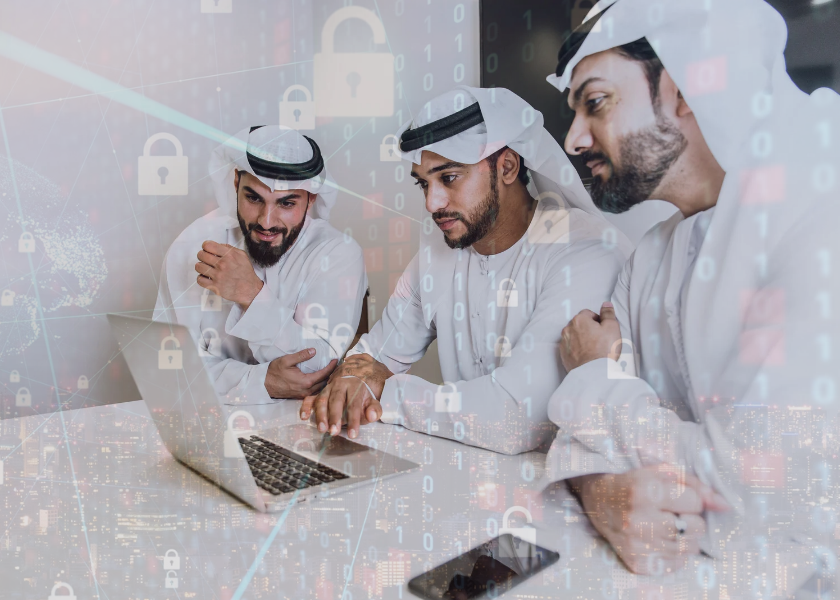
Cyber threats today are smarter, faster, and more damaging than ever before. For businesses in the Middle East, the challenge is even greater because digital transformation is happening at lightning speed. From banking and energy to retail and government services, every sector is moving online—and so are the attackers. That’s why building a security culture in Middle East organizations has become a top priority. Without it, even the best cybersecurity tools fall short because one careless click from an employee can open the door to disaster.
Building a Security Culture in Middle Eastern Organizations
It goes beyond buying firewalls or spending a lot of money on hi-tech tools to develop a solid security culture. It necessitates changes of mindset, training, and commitment of the leadership. In the context of Middle Eastern companies, where digitalization is rapid and the rules are increasingly strict, leaders need to direct the staff towards safe practices. Anyway, there is more than technology of real security, but it is a matter of behavior.
Why Security Culture Matters More Than Ever
Organizations in the Middle East face unique risks. As more money is invested in the oil, energy, banking, and government sectors, cybercriminals are attracted to the region to seek to disrupt key sectors. Meanwhile, the employees have to be fast to adjust to digital change. Without the proper instructions, they can fall prey to phishing scams or use weak passwords, or even be careless with sensitive information. A good security culture means that the staff members are familiar with the way they can be responsible. As an example, employees tend to use multi-factor authentication when they know the reason why it is important. On the same note, when managers set good security behavior, their subordinates emulate. This cultural reversal brings security and makes it a shared responsibility.
Role of Leadership in Security Culture
Security culture is top-down. Leaders are the first to set the tone, and the employees follow suit. When the executives consider cybersecurity as an incidental matter, so do employees. Conversely, leaders who discuss risks freely, tell about experiences on previous cases, and give rewards to safe behaviors develop trust and control the whole unit.
Leadership is distinctive in the Middle Eastern organizations due to the hierarchical organization. The workers tend to look up to their bosses. Hence, when the leaders practice secure habits, other employees will have better commitment to them.

Practical Steps to Build a Security Culture
The following are workable measures that organizations can undertake:
- Train constantly: Constant training will keep the employees abreast of emerging threats. It should be interactive workshops, quizzes, and simulations, instead of one-time lectures.
- Encourage responsibility: Every worker should understand that security is not the IT department’s responsibility but the duty of every worker.
- Reward safe behavior: The rewarding of those who report phishing incidents or use safe protocols will attract others to do the same.
- Follow simple policies: Complex rules can be very confusing. Clear policies with few words to read ensure that compliance is not complicated.
- Mimic attacks: Phishing, incident drills train employees in real-life scenarios.
Using these strategies, companies will be able to build their human firewall, which may be more valuable than any software firewall.
Overcoming Challenges in Middle Eastern Organizations
Despite the awareness of the problem of security among many organizations, they have difficulty implementing the idea. Implementation can be challenging due to cultural differences, language obstacles, and different degrees of technical expertise. As an example, a multinational company in Dubai can hire personnel from various countries. The concept of security may not be the same for each group.
To deal with this, companies will have to make training programs relevant to various audiences. The multilingual materials and straightforward graphics and demonstrations make it easy to be able to make the message comprehensible to everyone. Also, organizations must ensure that security initiatives are aligned to cultural values, i.e., trust and collective responsibility; these are very much entrenched in the Middle East societies.
Integrating Security into Everyday Work
There can be no security culture in policies or meetings alone. It has to be introduced into day-to-day activities. Safe habits should be observed by employees who log in to email, process client data, or even those who use their own devices at work.
As an example, being reminded to lock their computers when they leave their desks, to work on secure cloud platforms, and not to use public Wi-Fi to work are easy steps that form long-term habits. These behaviors become second nature.
Technology and Security Culture in the Middle East
There is no solution to security problems with the help of technology, yet it can assist in changing culture. As an illustration, password managers decrease the urge to use weak passwords. In a similar manner, the installation of secure teamwork tools will make employees avoid unsafe platforms.
Technology investments are already high in the Middle Eastern organizations. Nonetheless, these tools are either not utilized enough or abused without the employee buy-in. Hence, businesses should make sure that individuals know the reasons and the methods of using every tool. It is at this point that technology makes the culture of security stronger rather than a wasted resource.
Conclusion
Security is no longer merely a tool or system concern. It is about people. Security Culture in the Middle East is where the digital transformation is going very fast; citizens need to change fast. The development of a security culture within Middle Eastern organizations provides organizations with the base to succeed in a risky digital environment. It gives strength to the employees, as well as giving hope to the customers, and enhances long-term reliability.
Frequently Asked Questions
1. What does Security Culture in the Middle East mean?
Security culture implies that employees will embrace safe practices, embrace policies, and consider cybersecurity as part of their job. It is more than tools and is about behavior.
2. What is the significance of the security culture creation in the Middle East?
The Middle East is experiencing a fast-paced digital expansion and cyber threats. The culture is effective in keeping the employees vigilant, minimizing risks, and safeguarding critical sectors.
3. What can leaders do to promote a security culture at their organizations?
Leaders can model secure behavior, discuss risks, reward safe behaviors, and secure every business decision.