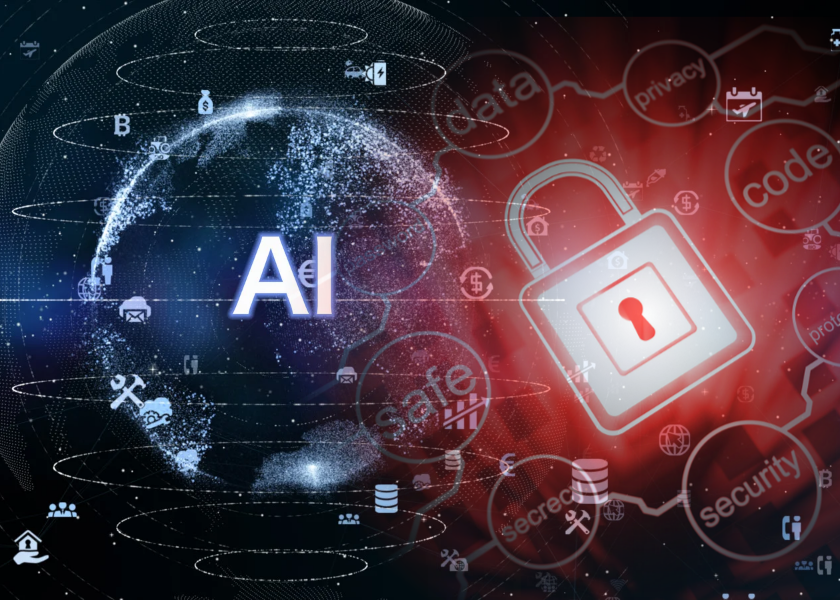
Businesses today live in a world where technology evolves daily, and with it, so do threats. Among the most dangerous are AI-powered cyberattacks, which are not just faster but also smarter than anything we have seen before. Hackers now use artificial intelligence to automate attacks, learn from failed attempts, and strike with terrifying precision. Unlike traditional threats, these attacks adapt in real-time, leaving outdated defenses useless.
Thus, companies need to be aware of the threats, realize how hackers leverage AI, and put in place preemptive measures. In this blog, you will find out why these threats are relevant, how they are affecting industries, and what can be done immediately to stay ahead.
The Rising Danger of AI-powered cyberattacks
Cybercrime has never stopped changing, but cybercrime through the use of AI has redefined the front. Malefactors cease to use spam or hapless phishing. They perform targeted campaigns and imitate human language, take advantage of system vulnerabilities, and evade traditional defense systems. What’s more, AI enables an attacker to scale. A single hacker can initiate thousands of attacks at the same time, whereas the system will be improved and smartened on its own. This capability compounds the difficulty of detection and raises the probability of success.
As a result, organizations without dated firewalls or antivirus software only run the risk of attack. Companies need to shift their focus to a proactive path to counter attacks by being proactive in their defense.
How AI is Changing the Face of Cybercrime
AI has revolutionized cybercrime in the following aspects. First, it allows hyper-personalized phishing. Criminals now gather information through social media, the company websites, and even data leaks that they use to prepare emails that can fool employees.
Second, AI decrypts passwords in a flash. Whereas weeks were used to conduct the brute-force attacks, now this is made possible in minutes. Third, deepfakes have found their way as potent tools of fraud. Employees can be sent false videos or voice mails that pretend to be the voices of senior executives, urging them to send money such that they share delicate information. Also, the malware built on AI conceals itself and changes every now and then to evade detection. It is different from other malware.
Industries Most at Risk
None of the industry is completely safe, and there are some that are of more risk than others. At the top of the list are the financial institutions since robbers are in pursuit of money. It is also a pressure that healthcare organizations deal with, as patient records are of high market value on the black market.
Retailing and electronic commerce companies are already under threat because of the large volumes of payment information that they maintain. Even smaller businesses can not avoid them. To hackers, they are simpler targets, provided they do not have a solid defense. It is because of this that the industry needs to have a security-first approach.
What Businesses Can Do to Stay Ahead
Fortunately, it is not completely out of the control of businesses. To combat the AI-based cyber-attacks, businesses must implement intelligent methods and improved guard. The steps below can keep you ahead:
- Invest in current AI defense technologies: You can not or should not use all existing AI defense tools. Artificial intelligence security systems: AI-based systems help identify strange activities, sound an alarm in real-time, and even forecast security breaches before they occur.
- Train employees on an ongoing basis: Most attacks begin with a human error. Thus, it is necessary to familiarize the teaching staff with the techniques of identifying phishing, the principles of creating powerful passwords, and encryption of communications.
- Implementing a zero-trust architecture: Make sure that you check every user and device when requesting access. The method decreases the risk of insider attacks.
- Craft an effective incident response strategy: No defence can be perfect, regardless of the tools. A plan means quick recovery, low downtime, and open lines of communication with stakeholders.
- Implement real-time monitoring: continual monitoring enables the organization to detect abnormal activity as soon as it occurs. The later the detection, the more damage will occur.
When businesses implement such measures, they not only minimize risks but also gain resilience to overcome such setbacks in the future.
The Cost of Ignoring AI Threats
Consideration of these risks can ruin a business when overlooked. Cybercrime losses are estimated to go to over 10 trillion dollars every year by 2025. In addition to monetary losses, organizations experience downtimes, ransomware sought, and regulatory penalties and litigation.
The worst is that reputational damage kills the trust of the customers. When customers start losing trust in your breadth of skill to protect customer information, it is nearly impossible to gain them back. Thu, prevention is a priority. In brief, companies choose to invest in security today or end up paying a much more significant price tomorrow.
Conclusion
The increase of AI-powered cyberattacks is a new dawn in cybersecurity. Such threats are not ad hoc trends, but rather an indication of the future of cybercrime. Companies that get in on the ground floor now and invest in AI protection, educate employees, and implement zero-trust will keep themselves ahead.
Cybersecurity is not all about keeping your information secure; it is about keeping your reputation, finances, and your existence. The most efficient companies will acquire more trust from their customers and business partners, and those that take time to do that will become more and more exposed.
Frequently Asked Questions
1. How are AI-powered cyberattacks different from traditional attacks?
The customary attacks entail employing generic and stagnant tools, such as generic phishing emails. Unlike the case with traditional attacks, AI-based cyberattacks learn, evolve, and get better performance. They drive custom messages, execute automated and automated attacks, and usually defy countermeasures much more.
2. Are small businesses safe from AI-powered cyberattacks?
Not at all. Small businesses do not usually have high-level protection, and therefore, they are easy targets.
3. What should be the first step for businesses?
The initial thing to do is to raise awareness of it. Leaders should learn about the threat and inform the employees. Next, companies ought to invest in AI-based defense mechanisms, institute the concept of zero-trust, as well as prepare an emergency response plan.


