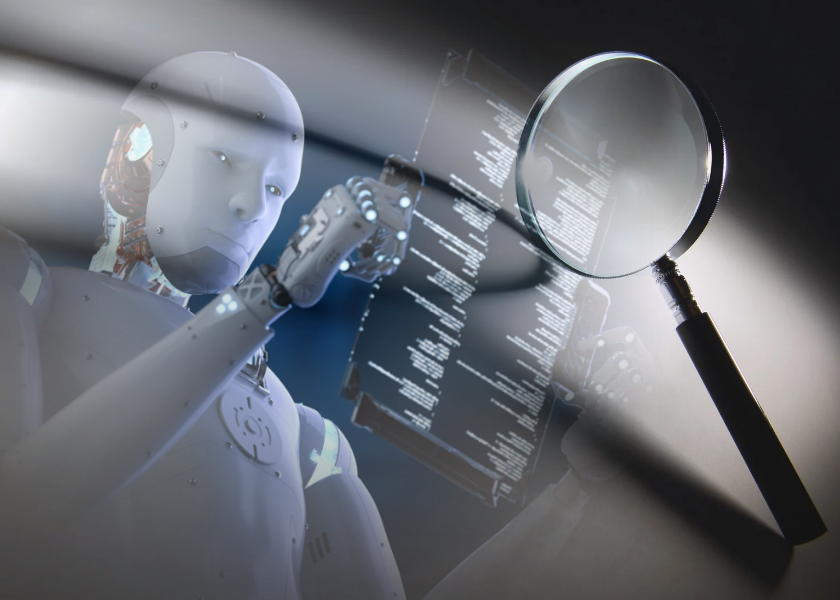
Cyber threats are not just growing; they are evolving at lightning speed. Businesses of all sizes now face ransomware, phishing, insider threats, and sophisticated malware attacks that bypass traditional defenses. In this fast-changing landscape, speed and accuracy are everything. That’s where ChatGPT MDR detection and other AI-powered tools like Claudia and Gemini step in.
In contrast to the traditional security systems that could trigger an alarm after some failure has occurred, the AI-driven Managed Detection and Response (MDR) operates in real-time. Imagine that it has a security guard who does not merely notice the burglar but also closes the doors, calls the police, and eliminates additional harm in several seconds.
This blog will examine how AI-based MDR is changing cybersecurity. You will learn how ChatGPT, Claudia, and Gemini can provide more prompt threat-detection, intelligent replies, and resilience unmatched. Also, we will explore how you can use them in the present day.
Why Businesses Need ChatGPT MDR Detection Now
Hackers do not act in isolation any longer. They are targeting faster than ever with AI automation, and even ransomware-as-a-service. Old-fashioned antivirus software or old-fashioned firewalls can not keep abreast. This is the very reason why ChatGPT MDR detection is a game-changer.
First, it aids security staff in detecting suspicious activity over the network, endpoints, and cloud platforms, before the attackers can inflict havoc. Second, it filters through all the alerts by prioritizing high-risk threats. And third, it is real-time, so that a gap between detection and response is measured in hours instead of in seconds.
MDR with AI plugs gaps even when you already have a security operations center (SOC). Rather than manually overworking teams investigating every alert, AI systems such as Claudia and Gemini can investigate large volumes of data and correlate events, and make intelligent recommendations. This causes companies to minimize downtimes, decrease expenses, and enhance adherence.
How AI-Powered MDR Works
To get a sense of the value, we will deconstruct the workings of MDR and AI together:
- Continuous Monitoring: MDR services are used to monitor networks 24/7 without interruption. Thousands of signals are processed by AI engines.
- Detection of Threats: ChatGPT MDR detection is a solution that will automatically identify suspicious behavior. It is like a radar system where anomalies are identified before they grow.
- Automated Response: AI performs first actions to isolate a device, block an IP, or cut off access instead of waiting until a human analyst can perform the task.
- Human Expertise: Last but not least, Human experts are used to justify AI insights and fine-tune defenses to achieve accuracy and protection without slowing down.
Such a blend of automation and human intelligence is the best of both worlds. Attackers have less time to move horizontally, and organizations have peace of mind.
Role of ChatGPT in MDR
ChatGPT usually comes to the mind of customer service chatbots or content generation when people hear it. However, it has a natural language processing (NLP) strength that makes it an important partner in security.
- Threat Content: ChatGPT is able to synthesize complex incident logs back into plain language. Analysts do not have to read hundreds of technical alerts, but only a summary, such as Suspicious login, unknown device blocked automatically.
- Accelerated Decision-making: ChatGPT MDR detection allows analysts to inquire about threats in a conversational manner. As an example, what are the endpoints that indicate lateral movement? And receive an immediate, unambiguous answer.
- Less Burnout: The analysts waste less time on false positives and more in strategic moves.
ChatGPT is faster in responding and more accurate, as it can serve as a translator between raw data and human knowledge.
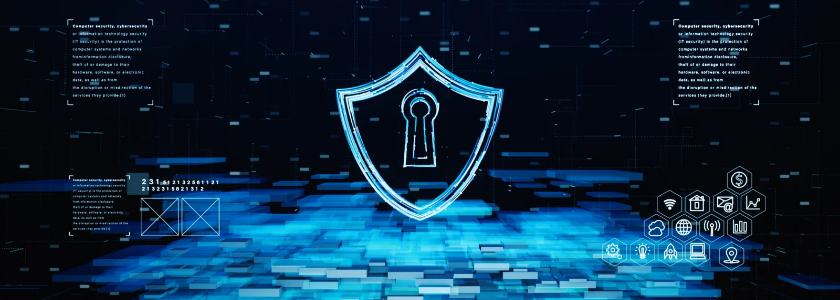
Claudia and Gemini in Security
ChatGPT has strength in NLP, but on their part, Claudia and Gemini have strong points to consider.
Claudia is a predictive analytics specialist. It is not only able to identify the existing threats but also predicts future attack points by the attackers. It is a proactive feature that assists organizations in developing resilience prior to the occurrence of a breach.
Gemini concentrates on adaptive defense. It uses past events to learn, it automatically updates playbooks used to respond, and it will not allow two attacks to use the same vulnerability twice.
All these tools build a security ecosystem that is constantly learning, adapting, and acting. ChatGPT MDR detection, predictive power position on Claudia, and adaptive intelligence on Gemini can help organizations capture even the most sophisticated enemies.
Practical Benefits for Businesses
Let’s get practical. So what is the implication of all this on your business?
- More Rapid Detection: Prevent attacks as they arise.
- Cost Savings: Need not have large in-house SOC teams.
- Compliance Support: Satisfy the regulatory requirement with automated response logs that are documented.
- Better Productivity: Automate monitoring of IT resources.
- Scalability: Supporting scaling infrastructures without redesigning the current systems.
Such advantages do not apply only to large corporations. The importance of small and medium businesses is equal since attackers attack these businesses as frequently. Indeed, small companies are usually at risk because of the in-house expertise. This is the reason why the integration of AI-powered tools of security tools and ChatGPT MDR detection is not only important but mandatory.
Challenges and How to Overcome Them
Naturally, there is no ideal solution. AI-based MDR has several problems:
- Data Privacy: Organisations should make sure that they keep sensitive data safe.
- False Positives: Even though minimized, there are still false alerts.
- Skill Gaps: Teams can require training to get a full grasp of AI outputs.
The positive thing is that the majority of providers of MDR provide the intrinsic compliance framework, the ongoing model update, and training. You can get over these hurdles by picking the right partner and maximizing ROI.
Future of MDR with AI
The future is exciting and also challenging. The attackers will keep on relying on AI to come up with more advanced threats. However, defenders do not stand still. We can expect:
- Smarter Automation: Systems that can identify as well as predict multi-stage attacks.
- Smooth Interoperability: AI MDR tools to be connected to a cloud, IoT, and hybrid environment.
- Greater Cooperation: ChatGPT, Claudia, and Gemini in even closer collaboration with human analysts.
It is certain that one: AI will become an important part of cybersecurity in the future. And those businesses that embrace ChatGPT MDR detection early will have a competitive advantage in terms of security and trust.
Conclusion
There is no longer a question of whether or not cybersecurity will happen. Hacker assaults are becoming smarter, quicker, and more devastating. But now, with ChatGPT MDR detection, predictive intelligence of Claudi, and adaptive defenses of Gemini, businesses can regain control.
It is not only a trend but the future of the MDR shift to AI-driven. When you switch to these tools now, you are not only protecting your systems, but you are investing in resilience, trust, and success.
Frequently Asked Questions
1. What is ChatGPT MDR detection, and what benefits does it provide to businesses?
ChatGPT MDR detection is a blend of natural language understanding and AI-powered threat monitoring. It assists companies to identiin identifying activities, clarifying language, and responding more rapidly than before.
2. Are MDR with AI-power advantageous to small businesses?
Absolutely. Small businesses do not usually have big SOC teams and are therefore weaker. MDR using ChatGPT, Claudia, and Gemini equals levelling the playing field by offering enterprise-level protection at a fraction of the price.
3. Does AI-based MDR have the capability to substitute human analysts?
No, it is not about replacing it, but augmenting. AI provides repetitive and data-intensive process management, whereas human professionals take part in sophisticated decision-making. This relationship provides both speed and accuracy.


