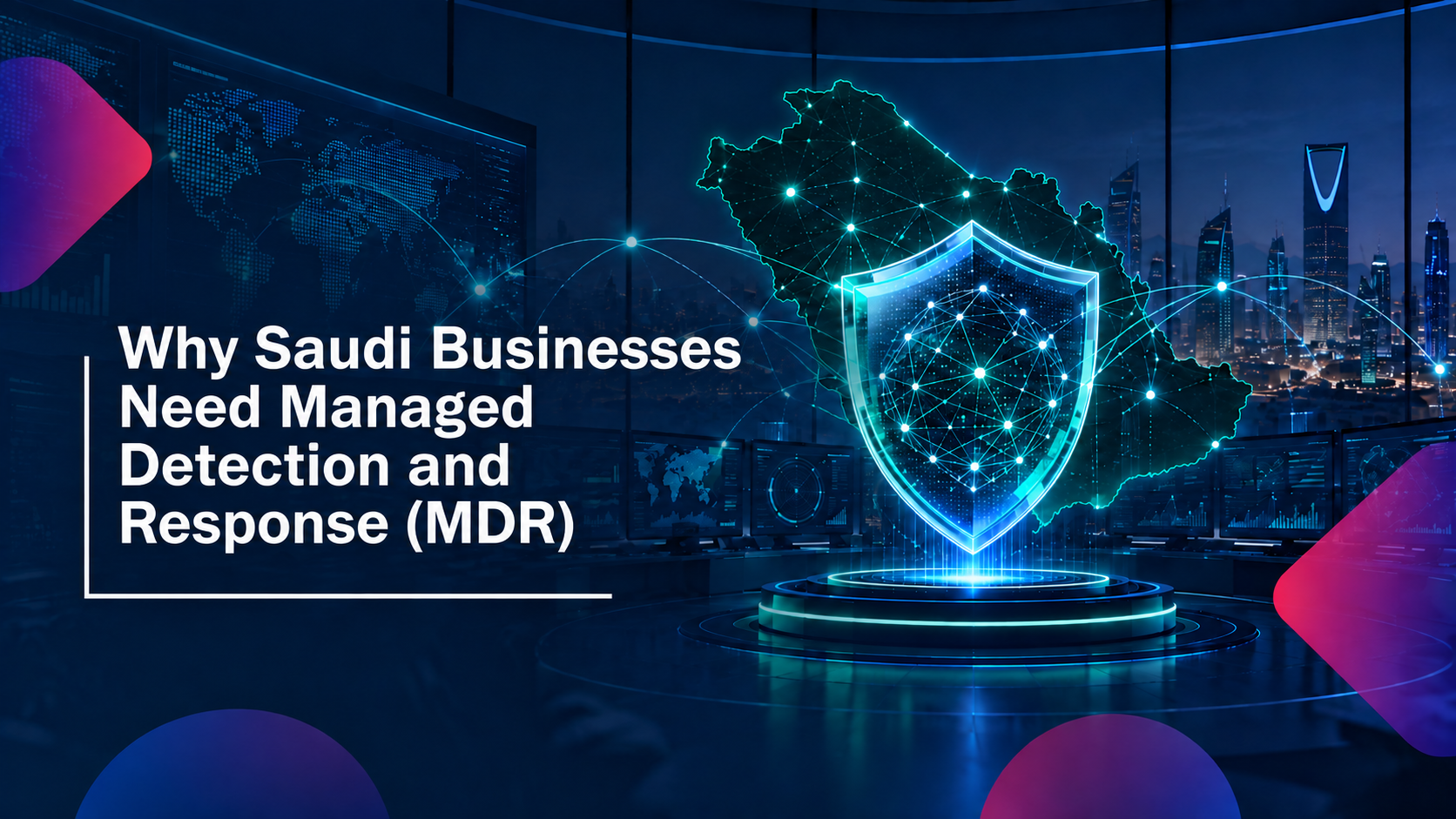
Cyber threats are becoming more difficult to identify because attackers no longer rely on one obvious method. They may use stolen passwords, phishing, malware, vulnerable systems or compromised accounts to enter an organization and move quietly through its environment. For businesses in Saudi Arabia, continuous security monitoring and fast response are important for protecting operations, customer information and business continuity.
Managed Detection and Response (MDR) gives organizations access to ongoing threat monitoring, investigation and guided response. Instead of waiting until an incident becomes visible, an MDR service helps security teams identify suspicious activity earlier and take practical action before the impact grows.
What Is Managed Detection and Response?
MDR is a managed cybersecurity service that combines security monitoring, threat detection, investigation and response support. Security specialists review activity from relevant systems, identify unusual behavior and help determine whether an alert represents a real threat or a harmless event.
The service can monitor information from endpoints, servers, networks, cloud platforms, identity systems and security tools. Depending on the environment, the MDR team may investigate suspicious logins, unusual file activity, malware indicators, privilege changes, data movement and other signals that require attention.
The most important difference between MDR and a basic alerting tool is the human expertise behind the process. Software can generate alerts, but an experienced security team helps prioritize alerts, investigate context and recommend the next step.
Why Saudi Organizations Need Continuous Security Monitoring
Many organizations operate across offices, remote users, cloud applications, connected devices and third-party services. This creates a larger environment to protect and more opportunities for unusual activity to go unnoticed. A business may have security products installed but still lack the time or specialist staff needed to review alerts around the clock.
Saudi businesses also work in sectors where availability, trust and data protection are especially important. A security incident can interrupt customer services, delay internal operations, affect reputation and create expensive recovery work. Continuous monitoring helps reduce the time between suspicious activity, investigation and response.
MDR supports organizations that want stronger visibility without building a large internal security operations team. It can provide an additional layer of expertise for IT departments and help smaller teams handle security events in a more structured way.
Key Benefits of MDR Services
Earlier Detection of Suspicious Activity
MDR teams use monitoring and investigation processes to identify behavior that may indicate a compromise. Earlier detection gives the organization more time to isolate affected systems, secure accounts and reduce possible damage.
Faster Investigation and Response
When an alert appears, the response should not depend on guesswork. MDR specialists can investigate the event, assess its priority and recommend actions such as disabling an account, isolating an endpoint or reviewing related activity.
Better Use of Existing Security Tools
Organizations often have firewalls, endpoint protection, email security and cloud controls already in place. MDR can help connect those signals and turn them into a more useful monitoring process instead of leaving each tool to operate separately.
Access to Cybersecurity Expertise
Hiring and retaining a complete in-house security operations team can be difficult. MDR provides access to security knowledge and defined response procedures without requiring every organization to build the same capabilities internally.
Clearer Security Reporting
Regular reports can help management understand the main risks, important alerts, response activity and recommended improvements. This supports better decisions about security priorities and future investments.
What Does an MDR Service Monitor?
The exact coverage depends on the organization, but a managed detection and response program may monitor endpoints, servers, firewalls, network traffic, cloud services, user identities, email systems and security logs. It may also review activity related to privileged accounts, remote access, unusual authentication and suspicious changes to important systems.
Before starting, the provider should document which systems are included, how alerts are handled, how incidents are escalated and what information is required from the client. Clear scope helps avoid gaps and makes the service easier to measure.
How to Choose an MDR Provider in Saudi Arabia
Organizations should look beyond the words used in a service name. Ask how the provider collects security data, who investigates alerts, how quickly urgent incidents are escalated and whether the service includes practical response guidance.
It is also useful to ask about reporting, communication channels, onboarding, data handling, service availability and integration with the organization’s current tools. A suitable provider should explain the process in clear language and adapt monitoring to the organization’s risk profile.
The provider should also explain what happens during a suspected incident. A written response process helps the client understand responsibilities, escalation contacts and the steps required to contain and recover from a threat.
MDR Is Part of a Wider Cybersecurity Strategy
MDR is not a replacement for secure passwords, multi-factor authentication, backups, patching, staff awareness and vulnerability management. It works best as part of a wider cybersecurity program. Organizations should continue improving system security, reviewing user access and training employees to recognize suspicious messages and requests.
Regular vulnerability assessments and penetration testing can also help identify weaknesses before attackers exploit them. Strong preventive controls combined with continuous monitoring give businesses a more complete approach to managing cyber risk.
Protect Your Business with Managed Detection and Response
Managed Detection and Response can help Saudi organizations improve visibility, investigate suspicious activity and respond to threats with greater confidence. It is especially valuable for businesses that need continuous monitoring but do not have the resources to operate a full internal security operations center.
IT Butler can help organizations review their security monitoring needs and identify practical improvements for their environment. Contact the IT Butler team to discuss your current systems, security priorities and the right next step for improving detection and response.
This article provides general information only. Every organization should assess its own systems, risks, compliance requirements and response procedures with qualified cybersecurity professionals.
Frequently Asked Questions About MDR
What does MDR stand for?
MDR stands for Managed Detection and Response. It combines continuous security monitoring, threat investigation and response guidance from cybersecurity specialists.
Is MDR suitable for small and medium-sized businesses?
Yes. MDR can help organizations that need expert monitoring but do not have the staff or budget to operate a full internal security operations center.
What is the difference between MDR and antivirus software?
Antivirus software helps protect individual devices, while MDR provides broader monitoring, human investigation and response support across the systems included in the service.
Does MDR replace penetration testing?
No. MDR focuses on detecting and responding to suspicious activity. Penetration testing and vulnerability assessments help identify weaknesses before attackers exploit them. These services work well together.
How quickly can an MDR provider respond?
Response times depend on the provider’s service agreement and incident severity. Before starting, confirm monitoring coverage, escalation procedures, response targets and communication channels.
How should a Saudi business start with MDR?
Begin by reviewing your current systems, security tools, business risks and incident-response process. A qualified provider can then recommend suitable monitoring coverage and a practical onboarding plan.